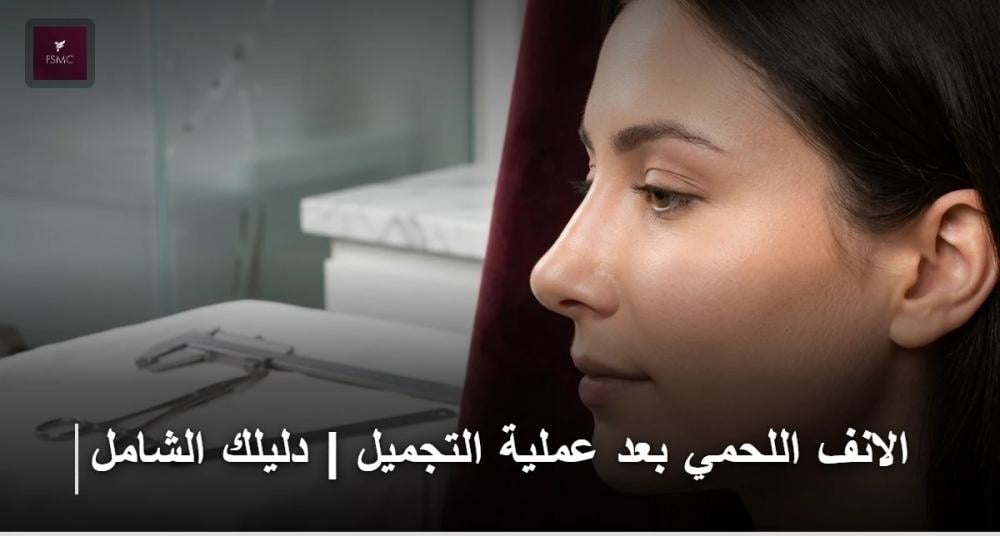
People often wonder what to expect from a fleshy nose after rhinoplasty: Will its shape change completely? Will the result be natural? These are perfectly legitimate questions, as fleshy noses require different techniques than other nose types. Understanding the nature of this type of nose before and after surgery will make you more prepared and less anxious.
The First Specialist Medical Clinics offer comprehensive cosmetic surgery services , including all types of rhinoplasty, from accurate diagnosis to post-operative follow-up. The goal is always a natural result that complements the facial features, not just an exaggerated cosmetic change.
What is a fleshy nose after cosmetic surgery?
A fleshy nose is one where fatty and cartilage tissue predominates over bone, which is why it often appears wider and more elongated at the tip. The surgical approach to a fleshy nose differs significantly from that of a bony nose, as the surgeon primarily focuses on reshaping the cartilage and tightening the soft tissues rather than sculpting the bone.
The truth is that the thick skin that accompanies a fleshy nose in most cases is the biggest challenge. Even if the rhinoplasty is performed with great precision and the cartilage is perfectly shaped, the thick skin can obscure some of the finer details in the final result. This is precisely why the surgeon needs exceptional experience to work with this type of nose.
What's noteworthy here is that the recovery period after rhinoplasty for fleshy noses is relatively longer than for bony noses, and the final result can take between one and one and a half years to appear in some cases. Many people are unaware of this fact and are surprised by it after the procedure.
The difference between a fleshy nose and a bony nose
- A fleshy nose is made up mainly of cartilage, fat, and soft tissue, while a bony nose is dominated by a clear bony structure.
- The skin over a fleshy nose is thicker and oilier, which weakens the clarity of fine surgical details in the final result.
- Rhinoplasty for bony noses involves breaking and reshaping the nasal bone, while rhinoplasty for fleshy noses focuses on shaping cartilage and reducing soft tissue.
- A fleshy nose is more common among people with dark skin and some populations of Arab, African and Asian descent.
- Swelling after surgery on a fleshy nose lasts longer compared to a bony nose due to the density of soft tissue.
- The result in a fleshy nose is more moderate and does not give the same dramatic transformations that some patients expect compared to a bony nose.
Rhinoplasty for a wide, fleshy nose
Rhinoplasty for a wide, fleshy nose is one of the most common requests for cosmetic surgery, especially among those who feel the width of their nose tip is disproportionate to their facial features. A wide, fleshy nose is not necessarily less attractive, but achieving balance is always the surgeon's goal.
The rhinoplasty procedure for a wide, fleshy nose relies on several carefully considered techniques. The surgeon reduces the size of the lower lateral cartilages that form the tip of the nose, then reattaches them to create a more harmonious and defined shape. The nostrils may also be narrowed if they are noticeably wide.
The truth is that the success of rhinoplasty for a wide, fleshy nose is directly linked to the patient's realistic expectations. A fleshy nose after rhinoplasty will not become as delicate and refined as a Caucasian nose, but it will be more harmonious and balanced with the face. This distinction is crucial for everyone to understand before making their decision.
Types of rhinoplasty for fleshy noses
- Open rhinoplasty: The surgeon makes a small incision in the wall separating the nostrils, giving him full access to the internal structure. It is preferred for complex cases.
- Closed rhinoplasty: The incisions are made entirely inside the nose without any visible external marks, and it is suitable for cases that require less complex modifications.
- Non-surgical rhinoplasty: This involves using fillers or Botox to improve the appearance of the nose without surgery, and is suitable for simple cases or those who want a temporary result.
- Nose narrowing (Alarplasty): A specialized technique for narrowing the base of the nose and its nostrils, and it is very common in cases of a wide, fleshy nose.
- Tip lift (Tip Plasty): Focuses on reshaping the tip of the nose alone without affecting the bridge of the nose, suitable for those who do not have a problem with the upper back of the nose.
Reducing the size of a fleshy nose
Reducing the size of a fleshy nose requires a delicate surgical approach that differs from reducing the size of bony noses. A skilled surgeon understands that excessive reduction may lead to unnatural results or breathing difficulties later on, so they focus on balance and function together, in addition to the appearance.
Rhinoplasty in Riyadh has witnessed remarkable advancements in techniques for reducing the size of fleshy noses, with surgeons now relying on structural preservation techniques instead of excessive cartilage removal. This approach reduces the likelihood of cartilage breakdown over time and yields more stable results.
A well-designed reduction of a fleshy nose means that the nose remains in a natural size relative to the face, and that the airways are not negatively affected. A surgeon who pays attention to this balance is truly worthy of your trust.
Book now for a nose reshaping treatment.
Complications of rhinoplasty (nose surgery)
- Prolonged swelling: This is one of the most bothersome things for patients, and the swelling in the fleshy tip of the nose may last for more than a year.
- Asymmetry: A slight difference may appear between the two sides of the nose after the operation, much of which disappears as healing is complete.
- Visible scarring: rare in closed rhinoplasty, and more likely in open operations if the incision is not cared for.
- Difficulty breathing: This may occur if excessive narrowing of the airway or nostrils is performed.
- The need for a corrective procedure (Revision): This occurs in a certain percentage of cases and requires waiting for complete recovery first.
- Changes in the shape of the tip of the nose over time: The thick skin of a fleshy nose may cause gradual changes in shape due to the extra weight on the cartilage.
- Infection: rare but possible, and treated quickly if detected early.
Best clinic for cosmetic surgery of fleshy noses
Choosing the right clinic for rhinoplasty of fleshy noses is not a simple decision. You need to look for a surgeon with documented experience specifically with fleshy noses, not just bony noses, because the techniques are fundamentally different. The First Specialist Medical Clinics include a select group of doctors specializing in all types of rhinoplasty, with a focus on a comprehensive evaluation of each individual case.
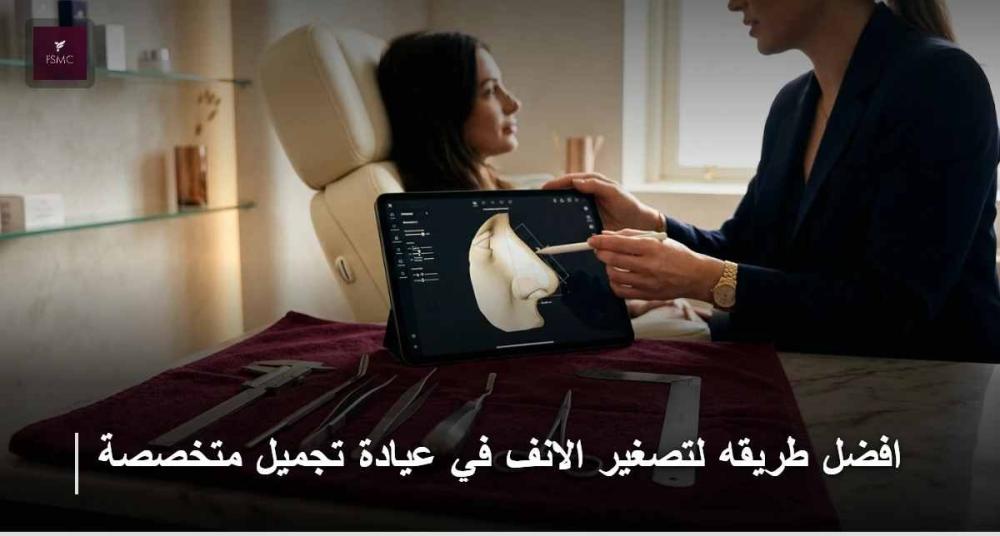
What truly distinguishes a good clinic is the pre-operative phase. A detailed consultation where the doctor understands your needs, explains what is realistically achievable, and shows you images of similar cases—these are the true hallmarks of professionalism. First Specialist Medical Clinics offer this detailed consultation as an essential first step before any surgical decision.
Most importantly, there is post-operative follow-up. A fleshy nose requires close monitoring for many months to ensure proper healing.
What are the success factors for rhinoplasty on fleshy noses?
- Choose a surgeon who specializes in fleshy nose surgeries specifically and has a documented record of successful results.
- Clarity of expectations on both sides — the patient understands the limits of what can be achieved, and the surgeon knows exactly what the patient wants.
- Follow all pre-operative instructions, including quitting smoking, as it significantly hinders wound healing.
- Strict adherence to post-operative instructions: Sleep with your head elevated, avoid putting pressure on your nose, and wear the medical splint for the full specified period.
- Be patient during the long recovery period without rushing the final result, which may take a whole year.
- Attend all follow-up appointments regularly for early detection of any problems.
- Avoid direct sunlight on the nose area in the first few months to prevent discoloration of the scars.
What are the causes of a wide, fleshy nose?
- Heredity and genes: the most common reason, as the shape of the nose is clearly passed down through generations.
- Ethnic origin: Some races have a fleshy nasal structure by nature as part of their particular aesthetic features.
- Skin thickness: Thick, oily skin gives the nose a wider, more elongated appearance, even if the cartilage is of normal size.
- Cartilage density: Weak or wide tip cartilage contributes to excessive width.
- Previous injuries: A broken nose or injuries that have not been properly treated may gradually change its shape.
- Aging: The skin loses its elasticity over time and may weigh down the tip of the nose, giving it a wider appearance.
Are the results of rhinoplasty for fleshy noses permanent?
This is a question every person seriously considering this step asks. The short answer is: yes, surgical results are mostly permanent, but the body never stops changing over time. Cartilage and soft tissues are affected by natural aging, and the thick skin of a fleshy nose may show slight changes in shape after a few years.
People often overlook the fact that the full results of rhinoplasty for fleshy noses are only visible after complete healing, which can take six months to a year and a half. The swelling that persists for many months leads many to judge the outcome too early.
What you should also know is that corrective procedures are possible if the result is not satisfactory, but they require waiting for complete recovery first, which cannot be rushed under any circumstances.
Frequently asked questions about a fleshy nose after rhinoplasty
Is rhinoplasty for fleshy noses painful?
The procedure is performed under general anesthesia, so the patient feels no pain during it. After the anesthesia wears off, mild to moderate pain may occur, which can be managed with painkillers prescribed by the doctor. Most patients describe the first few days as more uncomfortable than painful, mainly due to swelling, congestion, and difficulty breathing through the nose.
How long does the recovery period take after rhinoplasty?
A fleshy nose requires a longer recovery time after rhinoplasty compared to other types. The external splint is usually removed after one to two weeks, and a gradual return to normal life is possible within two to three weeks. However, deep swelling may persist for six months or more, and the true final result is often not visible until a full year has passed.
Is it possible to beautify a fleshy nose without surgery?
Yes, in mild cases, non-surgical rhinoplasty using fillers can be used to temporarily improve the symmetry of a fleshy nose. However, this option has limited capabilities and cannot reduce the size of the nose or narrow its nostrils; it only adds volume to specific areas to create the illusion of balance. Surgery remains the most suitable option for those who want real and permanent results.
A fleshy nose after rhinoplasty can give you a stunning result that positively impacts your self-confidence, provided you choose the right doctor, have realistic expectations, and fully adhere to the recovery instructions. This is not a matter to rush—take your time to research and consult. If you are considering this step, First Specialist Medical Clinics welcomes you for a detailed consultation with our rhinoplasty specialists, where you can receive a thorough assessment of your case and a well-thought-out treatment plan perfectly suited to you.